
Responsible Gambling
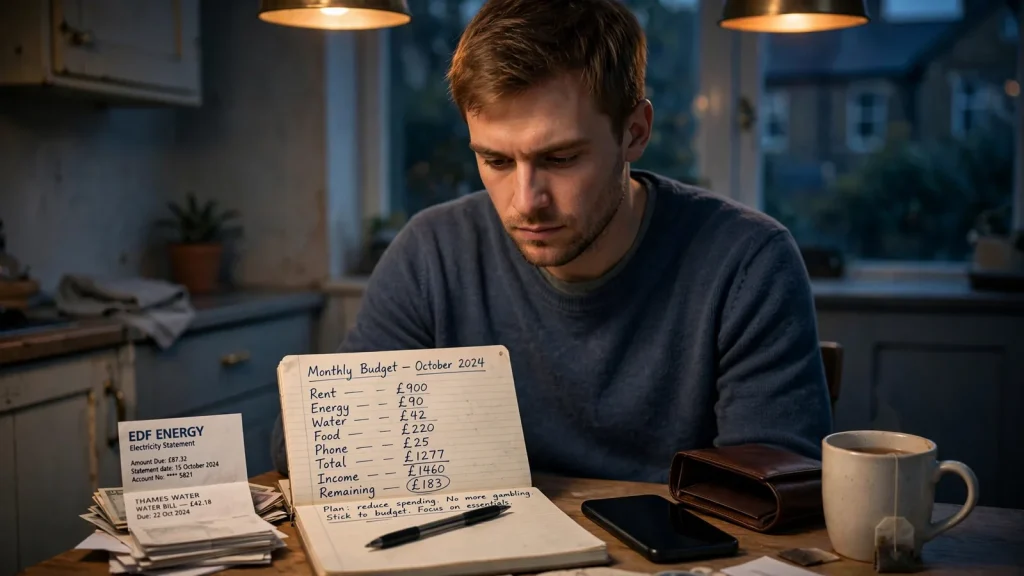
Gambling involves risking money on an uncertain outcome. It is not a way to earn money or a solution to debt, bills or other financial problems. A win is not income that can be relied on; a loss is money gone.
Signs that gambling may be becoming a problem
Look at what has changed in behaviour and finances, rather than relying on whether gambling still feels entertaining. Warning signs include:
- spending more than intended, or repeatedly increasing stakes to try to recover losses;
- gambling with money set aside for rent, bills, food or other essentials;
- borrowing, using credit or selling possessions to fund gambling;
- hiding gambling activity, losses or spending from family or friends;
- finding it difficult to stop, or returning soon after deciding to take a break;
- spending more time gambling than planned, or neglecting work, study, sleep or relationships;
- feeling anxious, irritable or preoccupied when unable to gamble.
One sign can be enough to justify stopping and reviewing the situation. Chasing losses does not change the odds; it adds another stake to the amount already lost.
Tools available through gambling accounts
UK-licensed casinos must provide responsible gambling tools, including self-exclusion. Remote gambling operators must also prompt new customers to set a financial limit before their first deposit and provide accessible account-level limit controls. These controls can be used to restrict spending; their availability does not make gambling affordable or remove the risk of loss.
Online slot autoplay is banned in Britain. A slot spin must last at least 2.5 seconds, and an online slots game cycle cannot start again until at least 2.5 seconds after the previous cycle began. The maximum total stake per game cycle is £2 for a person under 25 and £5 for a person aged 25 or older.
These rules set boundaries for operators and games. They do not prevent losses within those boundaries.
Where to turn
No independently verified gambling-support organisation, address or telephone number is available for this page. No external contact is listed rather than risk directing someone in difficulty to an unverified service.
For immediate practical steps, use the responsible gambling controls in the casino account: set or lower a financial limit, and use self-exclusion where gambling needs to stop. If those controls are difficult to locate, contact the operator through the account’s support channel and ask specifically for its responsible gambling tools and self-exclusion process. A UK-licensed casino must provide self-exclusion.
Where the issue concerns the operator’s handling of a complaint, UKGC licensees must offer an internal complaints process and access to an approved Alternative Dispute Resolution (ADR) service. The operator’s terms or complaints information should identify the applicable process and ADR service.
If gambling is linked to immediate danger, inability to meet essential costs or thoughts of self-harm, contact local emergency services or a trusted person who can be present. This is not a substitute for specialist gambling support; verified specialist contacts are not available here.
Age, payments and operator checks
Operators must verify a customer’s age before allowing deposits into a gambling account. This page cannot establish that any particular account or operator has completed the required checks. A remote operator must display its licence details on its gambling website or app and link to its public register licence information.
Remote gambling operators cannot accept credit-card payments for gambling, including credit-card funding routed through a money service business. They also cannot accept wallet payments where the wallet allows credit-card funds to be used for gambling. UK-licensed casinos cannot accept credit cards for gambling.
On gamblingapps-uk.com
The account’s limit and self-exclusion controls are available through the responsible gambling section of the site. Questions about those controls can be sent to [email protected]. Gambling remains a financial risk, not a source of earnings.