Best Sports Betting Apps UK — In-Play, Odds & Features
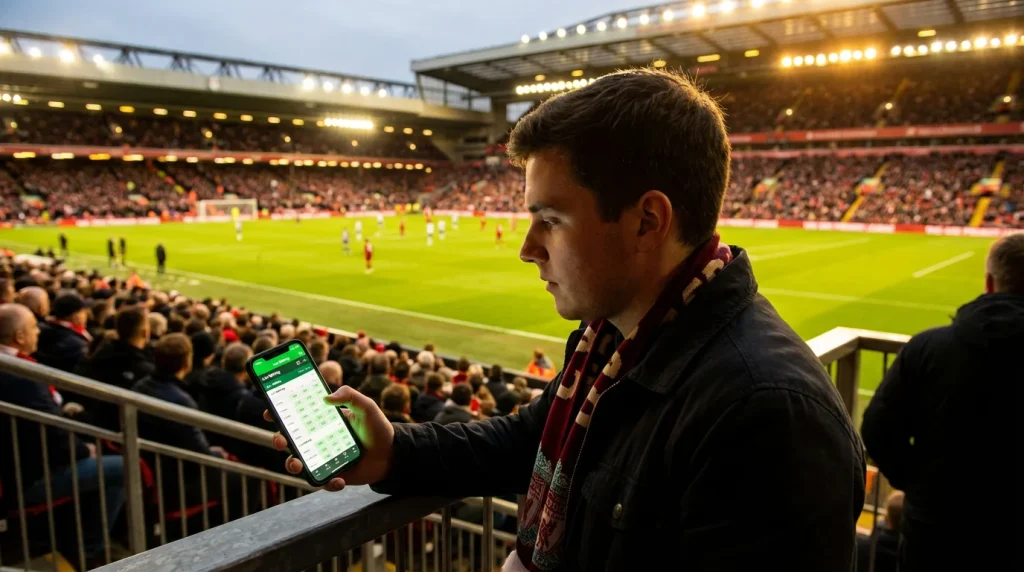
A sports betting app lives or dies by three things: odds, speed, and the markets it actually covers. Everything else — the interface polish, the brand reputation, the size of the sign-up offer — sits downstream of those fundamentals. An app with competitive odds and deep market coverage on a clean interface will retain users regardless of its marketing budget. An app with industry-leading bonuses but consistently short odds and shallow in-play markets will bleed users to competitors the moment the welcome credits expire.
The UK sports betting market is the most competitive in the world. More licensed operators target British punters than any other national audience, and the resulting pressure on margins, features, and user experience has produced a tier of apps that would be unrecognisable to anyone who placed a bet via mobile even five years ago. Live streaming is standard. Bet builders are expected. Cash out on accumulators is a baseline, not a differentiator. The bar is high, which means the apps that clear it are genuinely good — and the ones that don’t are noticeably behind.
UKGC licensing governs every app discussed here, which means the same regulatory framework that shapes casino apps — identity verification, responsible gambling tools, advertising standards — applies equally to sports betting. But the commercial logic is different. Casino apps compete on game selection and bonus structures. Betting apps compete on odds margins, market availability, and the speed at which they process bets during live events. Understanding that distinction is the starting point for evaluating which app deserves your money and, more importantly, your trust in the moments when a bet needs to be placed in seconds rather than minutes.
This guide ranks the leading UK betting apps on the criteria that matter for regular punters: odds competitiveness across major sports, the quality and depth of in-play betting, withdrawal reliability, and the features that separate a functional betting app from one that genuinely improves the experience of following and wagering on sport.
What Makes a Betting App Worth Using?
Good odds mean nothing if the app freezes during a live match. That sentence captures the tension at the heart of betting app evaluation: the product must perform under pressure, in real time, with real money at stake. A casino app can afford a half-second delay loading a slot. A betting app that lags by half a second during an in-play football market may cost the user a bet at the desired odds — or worse, execute it at a price that shifted during the delay.
Odds competitiveness is the single most important long-term factor. The margin a bookmaker builds into its odds — the overround — determines how much value the bettor loses on every wager, regardless of outcome. An operator running a 5% overround on Premier League football match odds extracts roughly twice as much margin per bet as one running 2.5%. Over hundreds of bets, that difference compounds into a significant cost. The challenge for bettors is that overrounds vary by sport, by league, by market type, and even by individual event. An app with tight football odds may run wider margins on horse racing, and vice versa. The best betting apps maintain competitive margins consistently across their primary sports, not just on the headline markets that comparison sites use for benchmarking.
Market range defines what you can bet on and how. Pre-match markets are standard: match result, over/under goals, correct score, first goalscorer. The differentiation happens in depth — how many markets are available for a single event. A top-tier app might offer 200 or more markets on a Premier League match, covering everything from corner counts to player-specific props to half-time results. A mid-tier app might offer 50 to 80 on the same fixture. The depth matters because it determines whether you can find the specific angle you want to bet on or whether you’re limited to the bookmaker’s menu of standard offerings.
In-play market coverage amplifies this distinction. Many apps offer extensive pre-match markets but contract sharply once the event starts. The dedicated section on in-play betting below examines this in technical detail, but the headline point is straightforward: an app’s pre-match depth tells you nothing about its in-play quality, and the two should be evaluated separately.
Bet builder functionality has become a decisive feature for football and multi-sport bettors. The ability to combine selections from within a single event — a player to score, over 2.5 goals, and a team to win — into a single bet with a combined price was once a novelty. In 2026, it’s an expectation, and the quality of the implementation varies. The best bet builders allow complex combinations with minimal restrictions, offer competitive combined odds, and settle quickly after the event concludes. Weaker implementations restrict combinations, suppress combined odds below fair value, or take hours to settle.
Cash out and partial cash out give bettors control over live wagers. The ability to lock in a profit or cut a loss before an event concludes is one of the most practically valuable features in a betting app. But its reliability varies more than any other feature. An app that advertises cash out but routinely suspends the option during the moments when you’d actually want to use it — a sending off, a penalty, a late equaliser — delivers the branding without the substance. Whether an app’s cash-out feature works when it matters most is a question that only sustained use can answer, and it’s one of the reasons why testing an app with small stakes before committing is worth the effort.
Top Sports Betting Apps for UK Punters
The bookmaker that dominates football may fumble horse racing — specialism matters. The UK betting market doesn’t have a single app that leads every category, and pretending otherwise would misrepresent a landscape where genuine trade-offs exist between operators. Some apps are built around football, with deep European league coverage, sophisticated bet builders, and live stats integration that makes them the obvious choice for a punter focused on the beautiful game. Others are designed for horse racing, with live streaming of every UK and Irish meeting, best odds guaranteed policies, and race card tools that cater to form-study enthusiasts. A handful attempt to serve both equally, and the best of these succeed — though even they tend to lean one direction.
What the top-performing apps share is infrastructure. They process bets quickly during peak demand — Saturday afternoon with a full Premier League schedule and Cheltenham on the same day — without the latency spikes and bet rejections that plague weaker platforms. They refresh odds in near-real-time during in-play events. They settle bets within minutes of an event ending rather than hours. And they process withdrawals to e-wallets and debit cards within timeframes that signal respect for the customer’s money, not reluctance to part with it.
The competitive landscape in 2026 includes established operators that have refined their apps over a decade or more alongside newer entrants that launched with modern tech stacks unencumbered by legacy code. The established brands generally offer broader market coverage and deeper liquidity — their odds on obscure markets are more reliable because their trading teams have more data and experience — while newer entrants tend to deliver cleaner user interfaces, faster performance on mid-range devices, and more innovative feature sets. The trade-off between breadth and polish is real, and different bettors will prioritise differently.
One metric that doesn’t get enough attention in betting app comparisons is odds consistency across stake sizes. Some operators display competitive odds for small stakes but widen their margins — or reject bets entirely — when the stake increases. This practice, sometimes called “getting gubbed,” disproportionately affects successful bettors and is difficult to detect without sustained use. The apps with the best reputations in this area are those that accept larger stakes at displayed prices consistently, even from accounts with winning histories. It’s a harder metric to test than market depth or cash-out speed, but for any punter who takes betting seriously, it’s the one that matters most over time.
Best Betting Apps for Football
Football betting apps have become stat platforms first, bookmakers second. The leading apps for football integrate live match data — possession, shots on target, expected goals — directly into the betting interface, allowing punters to make in-play decisions informed by real-time performance metrics rather than gut feeling alone. This integration transforms the betting experience from a simple “pick and hope” exercise into something closer to data-informed decision-making, which appeals to a generation of bettors who grew up with Fantasy Premier League and xG models.
Bet builder is the defining feature of a top-tier football betting app. The best implementations allow you to combine player props (anytime goalscorer, shots on target, cards), match outcomes (result, total goals, both teams to score), and half-specific markets into single bets with transparent combined pricing. The number of combinable markets per event varies by operator — some allow four or five selections, while the most generous permit eight or more on major Premier League and Champions League fixtures. Speed of settlement after the final whistle is a quality marker: the best apps settle bet builder wagers within 15 minutes; slower operators may take an hour or more.
League coverage depth separates the football-focused apps from the generalists. An app covering the Premier League, Championship, La Liga, Bundesliga, Serie A, Ligue 1, and the Champions League offers a minimum standard. The truly deep football apps extend to the EFL League One and Two, the Scottish Premiership, major South American leagues, and qualifying rounds of European competitions with pre-match and in-play markets for each. If you bet on football beyond the top five European leagues, the breadth of an app’s lower-tier coverage is the fastest way to assess whether it’s built for football enthusiasts or simply offering football because it has to.
Acca insurance — the refund of a stake (usually as a free bet) when one leg of an accumulator lets you down — is a standard promotional feature but varies in execution. Some apps limit insurance to accumulators of four or more legs at minimum odds per selection. Others apply it more generously. The frequency of these promotions (daily, weekly, match-day only) and whether they apply to bet builder accas as well as traditional multiples affects their practical value for regular football bettors.
Best Betting Apps for Horse Racing
Horse racing rewards the app that streams every race and guarantees the price. The UK and Irish racing calendar runs nearly every day of the year, with multiple meetings competing for attention on any given afternoon, and the betting apps that serve this market best are the ones that treat racing as a primary product rather than a secondary offering bolted onto a football platform.
Best odds guaranteed (BOG) is the feature that racing bettors check first. Under a BOG policy, if you take a price on a horse and the starting price (SP) is higher, the bookmaker pays you at the better price. It sounds simple, but the implementation matters. Some operators apply BOG only to selected meetings or restrict it to stakes below a threshold. The best racing apps apply BOG across all UK and Irish meetings without stake restrictions, which eliminates the timing pressure of trying to find the optimal moment to place a bet — you take the price you see, knowing you’ll receive the SP if it drifts higher.
Live streaming of every UK and Irish fixture is the second non-negotiable. Racing is a visual sport in a way that football isn’t — watching the race unfold is integral to the betting experience, not supplementary to it. Apps that stream races from all major courses (Ascot, Cheltenham, Aintree, York) as well as smaller daily meetings give bettors a complete product. Those that limit streaming to selected meetings, or require a funded account balance to access streams, provide a diminished experience that sends serious racing punters to competitors.
Race card quality matters more on racing apps than on any other sport-specific product. A well-designed race card provides form guides, jockey and trainer statistics, going conditions, draw biases, and market trends — ideally without requiring the bettor to leave the app. The best racing apps integrate data from Racing Post or equivalent sources directly into the card, allowing bettors to study form and place a bet within the same interface. Apps that show only a list of runners, odds, and a bet slip are functional but inadequate for the informed racing bettor who expects the app to support their research, not just their transactions.
Each-way terms — the fraction of the win odds paid for a placed horse and the number of places paid — vary between operators and between individual races. The standard for handicap races is one-quarter the odds for the first four places, but some operators offer enhanced each-way terms (one-third the odds or extra places) as promotional features on selected races. These enhanced terms represent genuine value when available, and the apps that offer them regularly earn loyalty from each-way bettors who understand the mathematical impact of an extra place or a better fraction.
In-Play Betting on Mobile — Features That Matter
In-play betting is a speed game — and the app’s latency is your invisible opponent. The odds you see on your screen during a live event are a snapshot of a continuously moving target. Between the moment you tap “place bet” and the moment the server confirms the wager, the odds may have shifted. The app’s handling of this gap — its latency, its delay tolerance, and its policy on odds movement during bet processing — determines whether in-play betting feels like a fair interaction or a rigged one.
The technical architecture behind in-play betting is more complex than most bettors appreciate. Odds are updated by traders (human or algorithmic) reacting to events in the match, and those updates must propagate from the trading system to the app’s servers, through the CDN, and onto your screen. On a well-engineered app, this pipeline operates in sub-second intervals for major events. On a poorly optimised one, the delay can reach several seconds — an eternity during a fast-moving football match where a corner, a foul, or a red card changes the probability landscape instantly.
Market depth during live events is one thing — maintaining that depth reliably under match pressure is another. Some apps display 50 in-play markets at kick-off but quietly remove half of them once the first goal goes in, when trading desks pull back to reduce risk exposure. The best apps maintain their in-play catalogue through the full 90 minutes, including niche options like next corner, next booking, and half-time result, adjusting prices in real time rather than simply closing markets when events become harder to price. Offering deep in-play coverage on a quiet League Cup fixture and a tense Champions League semi-final equally is a technical and commercial commitment that distinguishes the top tier from the rest.
Cash out during live events deserves particular scrutiny. The value offered on a cash-out during in-play betting is calculated by the operator based on current odds and its margin — it’s not a neutral “fair value” calculation. Operators typically build a margin into the cash-out price, meaning the offer will be less than the mathematical fair value of the bet at that moment. The size of that margin varies between operators and between situations. An app offering cash out at 90% of fair value is meaningfully better than one offering it at 75%, and the only way to assess this is through repeated use and comparison.
Micro-betting — wagers on individual events within a match, such as the outcome of the next drive in American football or the next point in tennis — is growing but remains niche in the UK market. The apps that have implemented it best offer quick-fire markets with near-instant settlement, creating a rapid-cycle betting experience that sits somewhere between traditional sports betting and casino gameplay. It’s engaging, potentially profitable for informed bettors on specific sports, and carries obvious responsible gambling implications that the UKGC is actively monitoring.
Free Bets and Welcome Offers — How to Evaluate Them
A £30 free bet with 24-hour expiry and 2.0 minimum odds isn’t as generous as it sounds. Free bets are the dominant welcome offer format in UK sports betting — more common than deposit matches, which are the standard in casino apps — and their apparent simplicity (“bet £10, get £30 in free bets”) conceals a range of conditions that materially affect their actual value. Evaluating a free bet requires looking past the headline figure and into the mechanics of how it’s structured, restricted, and ultimately converted into withdrawable cash.
The two primary formats are “stake not returned” and “stake returned” free bets. The far more common type — stake not returned — means that if your £30 free bet wins at odds of 3.0, you receive the profit (£60) but not the £30 stake itself. Your actual return is £60, not £90. This structure reduces the effective value of a free bet to roughly 50% to 70% of its face value at typical odds ranges, depending on the selections you make. Stake-returned free bets, where both the profit and the original stake are paid out, are genuinely more valuable and correspondingly rarer.
Minimum odds requirements limit which bets qualify, both for the triggering bet (the real-money wager that activates the free bet) and for the free bet usage itself. A common minimum is 1.5 (1/2 in fractional odds) for the qualifying bet and 2.0 (evens) for the free bet. These thresholds push bettors toward higher-risk selections where the bookmaker’s margin is typically wider, which is the operator’s intended outcome. A bettor who would naturally bet at 1.3 odds can’t use the free bet on their preferred selections and is forced into less familiar territory.
Expiry windows on free bets tend to be short — 7 days is common, 3 days isn’t unusual, and some operators enforce 24-hour deadlines. The short window creates urgency that often leads to suboptimal bet selection, particularly for bettors who don’t have a strong opinion on any event falling within the expiry period. Using a free bet on a match you wouldn’t normally bet on, just because it’s happening before the deadline, defeats the purpose of disciplined betting and tilts the expected outcome further toward the bookmaker.
Market restrictions sometimes apply. Some free bets can only be used on specific sports, specific bet types (singles only, not accumulators), or specific events (the next Premier League round, a specific race meeting). These restrictions narrow your options and may eliminate the most value-maximising use of the free bet. An unrestricted free bet usable on any sport, any market, and any bet type is categorically more valuable than a restricted one of the same face value.
The practical approach to evaluating a free bet offer is to calculate its expected net value after all conditions are applied. A £30 free bet (stake not returned) with 2.0 minimum odds and a 7-day expiry has a real-world value of approximately £12 to £18 to a competent bettor — not £30. If the qualifying bet requires a £10 stake on a market where the operator runs tight margins, the net cost of that qualifying bet (the expected loss from the house edge) is roughly £0.50 to £1.00. The offer is still positive value, but the gap between the headline and reality is significant enough that treating the advertised figure as the true value leads to consistently inflated expectations.
The Second Screen Shift — Why Mobile Betting Won
You used to go to the bookmaker. Now the bookmaker lives in your pocket. The shift from desktop to mobile didn’t just change the technology of sports betting — it changed the behaviour. UK mobile betting now accounts for the overwhelming majority of online wagers, and the pattern of use reflects a fundamental change in when and how people bet. The dominant mode is second-screen betting: watching a match on television while placing bets on a phone, reacting to the action in real time, adjusting wagers as the game unfolds.
This shift has made betting faster, more frequent, and more impulsive. The same in-play features that make apps powerful tools for informed bettors also make them efficient at capturing decisions made in emotional moments — the urge to bet on a goal after watching a near-miss, the impulse to chase a losing pre-match bet with an in-play wager at reduced odds. The friction that once existed between wanting to bet and actually placing a bet — walking to a shop, logging into a desktop, navigating a slow website — has been compressed to a tap and a fingerprint scan. Speed cuts both ways.
Push notifications add another layer. UK betting apps use notifications to alert users about upcoming events, price boosts, free bet offers, and cash-out opportunities — all delivered to the device that’s already in their hand. These notifications are marketing, precisely targeted and timed to coincide with moments of peak engagement (half-time, between races, during a break in play). The Gambling Commission has tightened rules around direct marketing to customers, but push notifications remain a primary engagement channel for operators, and managing them requires active effort from the bettor.
The responsible gambling implications of this shift aren’t theoretical — they’re the reason the UKGC mandates deposit limits, session time alerts, and cooling-off periods on every licensed app. Using these tools isn’t a sign of weakness or problem gambling. It’s a rational response to a product designed to minimise the gap between impulse and action. Set a deposit limit before you start. Enable reality checks. Turn off promotional push notifications if they trigger unplanned betting. The app is optimised to keep you engaged. Your tools are optimised to keep you in control. The second screen shift put the bookmaker in your pocket — but it also put the off switch there too.