
Live Dream Catcher Casino UK: Game and Checks
 Available in GB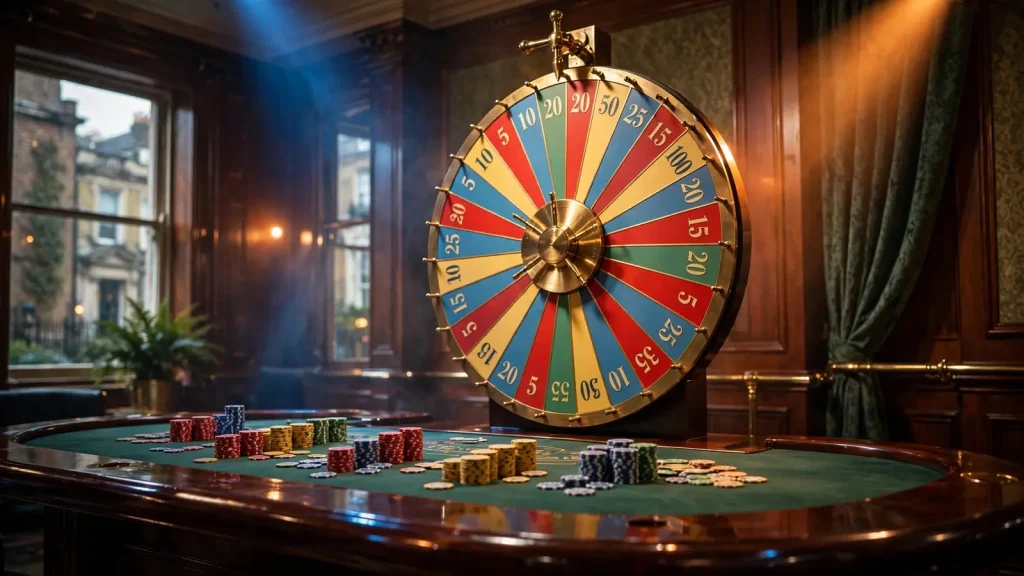
The guide separates the live game from the operator and outlines checks for availability, demo access, offer terms and play rules.
Live Casino Games and the Providers Behind Them
A live-casino search can point to two different things: a particular game, or an operator’s casino service. Dream Catcher is the game named in the search; an online casino is the service through which a customer might encounter it. Keeping those roles separate matters because a game’s name does not identify the company accepting deposits, setting account terms or providing customer support.
A live casino is a category of online gambling in which games are presented as live events rather than solely as software-generated displays. The label describes the format, not a single product or a guarantee that a particular title is available. An operator may offer live games alongside other casino products, while the games themselves are supplied as distinct products. The operator and the game provider therefore have different functions, even when both names appear around the same table or game page.
Casino Games in the UK: Slots, Live Games and More
For a person looking for Dream Catcher, the practical question is whether a particular operator actually offers that title. A casino’s general live-game section does not, on its own, establish that Dream Catcher is included. Nor does seeing the product name elsewhere show that every online casino carries it. Availability is a feature of an operator’s own catalogue, and catalogues can differ. The title and the venue are related, but they are not interchangeable.
This distinction also prevents a common category error: treating a list of live-casino operators as though it were a list of Dream Catcher providers. An operator runs the gambling service and presents its available games to customers. A provider develops or supplies game products. A venue may carry products from one or more providers, but the provider’s name alone does not confirm which operators offer a particular title. A current availability claim needs to be tied to the operator’s own catalogue, not inferred from a broad association between companies and live gambling.
The history of Grosvenor illustrates the difference between an operator and its games. Grosvenor first introduced live casino games in 2013, with an initial range that included Blackjack, Texas Hold’em and Roulette. Those titles describe the games in the launch range; Grosvenor is the operator. The historical detail shows that live casino services have been part of the UK-facing casino landscape for years, but it does not establish anything about the present availability of Dream Catcher at Grosvenor or elsewhere.
Live Roulette in the UK: Providers, Rules and Checks
That point is deliberately narrow. A past launch is not a current catalogue, and a launch list is not evidence that every later live game was included. Likewise, a casino that offers a familiar live title may not offer another title a customer expects. The only sound way to connect a named game with a named casino is to check that casino’s current game listing and terms. A general description of its live offering cannot substitute for that check.
The same separation helps when comparing what appears on screen with the service behind it. The game product has its own identity. The operator is responsible for the account relationship, including the conditions attached to deposits and withdrawals, customer support and account controls. These responsibilities do not transfer to a game provider merely because its product appears within the casino. For financial assessment, the operator’s terms are the relevant documents; a game title is not a statement of those terms.
The wording “live” should also be read as a format label, not as evidence about price, fairness, availability or a particular way of playing. Those matters require separate information. A game’s presence in a live-casino category does not establish its rules or payouts, and a provider name is not a substitute for the game information shown by the operator. Specific claims should be checked against the relevant product and service rather than inferred from the category.
In the UK, online gambling is legal only through licensed and regulated sites. Operators must verify a customer’s age before allowing a deposit, and a licence check concerns the operator, not the game. That is another reason not to treat a product name as proof about the site carrying it. The casino service and the game remain separate parts of the transaction.
Game Name
Dream Catcher
Service Type
Live Casino
Market
United Kingdom
Regulator
UK Gambling Commission
The distinction is simple, but useful: Dream Catcher names a game; an online casino names the service that may offer it. A provider’s role is separate again. Keeping those identities apart makes availability claims easier to test and prevents a familiar game name from being mistaken for a guarantee about the casino behind it. Any gambling expenditure should be limited to money that can be afforded to lose.
Dream Catcher: The Game Behind the Search
Dream Catcher is the name of a casino game, while a live casino is the setting in which an operator may make casino games available. Those are separate things. The game name does not identify a particular casino, and the words “live casino” do not, by themselves, establish which operator offers it or what its version contains.
That distinction matters when looking for Dream Catcher in the UK. A page describing a live Dream Catcher casino may refer to a game listing, an operator’s wider live-casino section, or an offer whose details depend on the specific site. The title alone does not settle which of those is meant. Treating the game and the casino as interchangeable makes it harder to tell what is actually being offered.
Dream Catcher should therefore be considered first as a named product, not as a promise about a particular experience. Its presence in a casino catalogue would be a statement about that operator’s offering at the time the catalogue is checked. It would not establish that another casino carries the same product, or that the game is available under identical conditions elsewhere. Availability belongs to the operator’s current catalogue; the name belongs to the game.
Live Baccarat Online Casinos in the UK: What to Check
The word “live” also needs careful handling. It can describe the category under which an operator presents a game, but it does not supply the rules, equipment, pace, or other details of Dream Catcher. Nor does it prove that every page using the phrase refers to the same version. A reliable description has to keep those claims separate: the game has a name; an operator may list it; and any more specific account of the presentation needs support from that operator’s own information.
The same separation applies to a search for a Dream Catcher casino in the UK. The phrase can sound as if it names a single destination, but it does not identify a casino business. A casino is the operator’s service; Dream Catcher is the game being sought within that service. Confusing the two can lead to claims about a game being attributed to the wrong business, or to an operator being treated as though its name were part of the game.
A useful description should say what it can establish and stop there. It can identify Dream Catcher as the game at the centre of the request. It can distinguish that product from the casinos that may carry it. It should not fill gaps with assumed instructions, outcomes, wagering options, or payout figures. A familiar-sounding name is not a substitute for published rules, and a casino listing is not a calculation of what a player might receive.
Do
- Check the operator’s current game catalogue for availability
- Verify the operator’s licence on the Gambling Commission register
- Read the specific terms and conditions attached to the account and game
Don’t
- Assume a game’s name implies its availability at a specific casino
- Treat a game provider’s name as a guarantee of the operator’s service
- Inferred availability from broad associations between companies
This restraint is especially important where money is involved. A game title cannot tell a player the cost of taking part, the conditions attached to a wager, or the amount that could be returned. Those figures and terms need to be stated by the operator for the specific game and offer. If they are not clearly presented, there is no sound basis for treating them as settled. Promotional language may describe an experience; it does not replace the terms that determine the financial result.
For the same reason, a broad label such as “Dream Catcher live casino” should not be read as a complete description. It joins a product name to a type of casino offering, but leaves the operator and the applicable details to be established separately. The practical question is not whether a phrase sounds definitive. It is whether the relevant casino identifies the game and sets out the conditions that apply to it.
Dream Catcher’s place in a catalogue may also change. A game name appearing in a general article or an old listing does not prove that it remains available at a particular casino now. Availability is a property of the operator’s current service, not a permanent feature of the game’s name. Any statement about where it can be played needs to be checked against the casino concerned rather than carried forward from an unrelated description.
Online American Roulette Casinos in the UK: What to Check
That is the useful starting point for understanding a live Dream Catcher casino: the game and the casino are different entities, and details about one should not be used to infer details about the other. The game name identifies what is being discussed. The operator’s own current information is what establishes its offering and terms. Until those are clear, claims about the particular experience remain packaging rather than a usable account.
Any gambling decision also has a straightforward financial boundary: only money that can be afforded to lose should be put at risk. No game title or casino description changes that calculation.
Assessing a Casino Offer Without an Unsupported ‘Best’ List
A casino cannot be called the best place to play Dream Catcher on the basis of the game name alone. The game and the operator’s offer are separate things: a casino may provide access to a particular game, while its deposit conditions, bonus terms, payment rules and account protections determine the value and risk of the offer around it. A ranking that does not show how those elements were checked is a claim, not a comparison.
A useful assessment starts with the actual terms attached to the account. A headline bonus has no fixed value until its eligibility conditions, wagering requirements, qualifying games, expiry conditions and withdrawal restrictions are read together. The relevant calculation is not the advertised amount in isolation, but the amount that can be withdrawn after every condition has been met. If any condition is unclear, the offer’s value cannot be calculated reliably. That is not a minor footnote; it is an unresolved cost.
Essential Distinction
The game (Dream Catcher) and the service provider (the casino) are separate entities with different responsibilities and terms.
Terms should also be read for exclusions. A promotion may apply only to selected games or may treat different games differently for wagering purposes. Nothing about the Dream Catcher name establishes that it qualifies for a promotion, contributes in a particular way, or is available under the same conditions as other games. The casino’s own current terms are the controlling document for its offer. Claims in promotional copy should be checked against those terms before they are treated as part of the deal.
The same discipline applies to payments and withdrawals. An offer’s value depends in part on whether its payment conditions are workable, not just on what appears on a banner. The relevant terms include the accepted funding methods, any restrictions attached to a chosen method, withdrawal conditions and the process for raising a complaint. UK-licensed casinos cannot accept credit cards for gambling, including credit-card funding routed through a money service business; a wallet that permits credit-card funds to be used for gambling is also not an acceptable route. A payment method that appears available should therefore be assessed by how it is funded, not merely by its label.
Account controls are part of the offer’s practical cost as well. Remote operators must prompt new customers to set a financial limit before their first deposit and provide accessible account-level limit controls. UK-licensed casinos must also provide responsible gambling tools, including self-exclusion. These are not promotional extras to be weighed against a bonus. They are requirements relevant to the account and should be considered alongside the operator’s stated terms.
Online European Roulette Casinos in the UK
Legitimacy is a threshold condition, not a quality score. Remote operators serving consumers in Great Britain must hold the relevant Gambling Commission licence. Before depositing, the licence number should be checked against the Commission’s public register, with attention to whether the named business and the site being used match the register entry. A familiar brand name, polished presentation or reference to a licence does not substitute for that comparison. If the operator’s legal identity is unclear, the offer cannot be assessed as though its terms were the only issue.
A dated register check needs to be described with its date and scope, rather than turned into a permanent verdict. An affiliate review citing the Gambling Commission’s public register reported that, on 26 September 2026, it found no LuckyPays entry under that brand or the stated domain, including luckypays.io. That is a time-specific reported register result, not a general statement about every casino or a substitute for checking the current register directly. The point is methodological: a licence claim should be traceable to the regulator’s record, and a result concerning one brand should not be stretched into a ranking of Dream Catcher venues.
Comparisons should therefore be made only between offers whose terms can be verified on the same basis. Relevant differences include bonus restrictions, payment conditions, account controls and the clarity of the operator’s legal identity. A list of supposed best Dream Catcher casinos would need evidence that those details had been checked for each named venue and that the comparison remained current. Without that evidence, naming a winner would imply more certainty than the available terms support.
Verification Checklist
- Confirm the operator holds a valid UK Gambling Commission licence
- Check the current game listing for Dream Catcher availability
- Verify the specific rules and payout structures for the game
- Set a financial limit before making a deposit
- Review deposit and withdrawal terms for the account
The game itself is not a measure of the casino’s value. A casino’s promotion does not establish anything about the game’s mechanics or likely returns, and a game title does not confirm the operator’s reliability. Those are separate questions, requiring separate evidence. For a meaningful assessment, the operator’s licence and terms come first; any comparison of the game must not be used to fill gaps in either.
No bonus changes the basic financial boundary: gambling carries the possibility of loss, so only money that can be afforded to lose should be used.
Where Dream Catcher Casinos Fit in the UK Market
A casino offering Dream Catcher sits within the wider UK gambling market; the game’s presence does not create a separate regulatory category. The relevant framework applies to the commercial gambling activity and to the operator providing it. That distinction matters because a live table’s presentation and branding do not, by themselves, establish which rules govern the service.
The UK Gambling Commission oversees gambling activity across the United Kingdom, including online casino services. In Great Britain, it is the sole regulator for commercial gambling. Its remit also covers remote gambling supplied to consumers in Great Britain, even when the equipment supporting the service is located elsewhere. A live casino cannot avoid that framework simply by placing its studio or technical infrastructure outside the country.
Casino Dice Games in the UK: Odds and Costs
For operators, the regulatory relationship is formal. The Commission grants operating licences to businesses and personal licences to individuals working in relevant roles in Great Britain. These are different forms of authorisation: a business licence concerns the company’s permission to provide gambling, while a personal licence applies to an individual operating within the sector. The presence of a familiar game title on a website is not a substitute for either.
This is the market context for Dream Catcher live casinos in the UK. The phrase describes casinos that may provide access to the game, not a special class of venue with its own regulator. The operator remains responsible for the gambling service it offers. Where a remote casino serves consumers in Great Britain, the location of its servers, studio or other key equipment does not remove the service from the Commission’s reach.
The UK-wide description also needs care. Great Britain has one regulator for commercial gambling, while the legal framework is not identical across every part of the United Kingdom. The Gambling Act 2005 governs gambling in England, Wales and Scotland, but not Northern Ireland. A broad label such as “UK casino” therefore does not erase regional differences in the underlying law.
Regulation concerns more than the name attached to a live table. It establishes which businesses may provide gambling and which individuals may perform regulated roles. It does not, by itself, tell a player whether a particular table is suitable, how its game works or what its financial terms are; those are separate questions. For a casino offering Dream Catcher, the regulatory status belongs to the operator and service, not to the wheel or game title in isolation.
Regulatory Scope
The UK Gambling Commission oversees gambling activity in Great Britain, including remote services even if the technical infrastructure is located abroad.
Age controls are part of the operating boundary: a gambling operator must verify a customer’s age before allowing a deposit. Participation in gambling also carries the possibility of losing the full amount wagered, so spending should be limited to money that can be afforded as a loss. These conditions apply to the wider online casino service, rather than being features unique to Dream Catcher.
Playing the Dream Catcher Casino Game
Playing a live casino game involves more than opening its table. The operator, the displayed game information and the account conditions all affect what happens before any money is at risk. For Dream Catcher, the name alone does not establish the rules, the available actions or how a round is settled. Those details need to be read in the live game interface rather than inferred from the product name.
Before starting, the published rules should explain how participation works, what choices are available and how the result affects a wager. If the rules shown by the casino do not answer a practical question, the gap should be resolved before money is committed. A familiar title is not a substitute for terms that can be checked.
The table’s classification also matters. Requirements that apply to online slots are not automatically requirements for every live casino game. Dream Catcher should not be treated as a slot, roulette game or another category solely because of its presentation. The relevant rules depend on how the product is classified by the operator and under the applicable gambling requirements. That distinction can affect which restrictions apply, so assumptions about other games are a poor basis for deciding how to play this one.
Online Casino Tournaments UK: Formats and Checks
Account controls set a separate boundary. Operators must verify a customer’s age before allowing a deposit, and remote operators must prompt new customers to set a financial limit before the first deposit while providing accessible account-level controls. A limit is useful only if it reflects a sum that can be lost without affecting essential spending. Gambling should be confined to money that can be afforded to lose; a session’s entertainment value does not alter its financial cost.
Payment restrictions also apply to remote gambling. UK-licensed casinos cannot accept credit cards for gambling, including credit-card funding routed through a money service business. A wallet cannot be used where it permits credit-card funds to be spent on gambling. A payment method being visible in an account does not, by itself, make it permissible for this purpose.
Some technical rules apply specifically to online slots in Britain: autoplay is banned, and at least 2.5 seconds must pass before another game cycle can begin. Those requirements should not be transferred to Dream Catcher without establishing that it is an online slot. Likewise, slot stake limits are relevant only where the product falls within that category; the title alone does not settle the point.
The practical decision is therefore conditional: understand the displayed rules, establish which requirements govern the game, and set an affordable spending boundary before play. If the classification or the terms remain unclear, delaying a deposit costs nothing. A game can wait; an unexplained wager cannot be made clearer after it has been placed.
Only gamble with money that you can afford to lose. No game title or casino description changes this fundamental financial boundary.
The Wheel: What Can Be Stated Reliably
The word “wheel” identifies the feature people associate with Dream Catcher, but it does not establish the design of the game. It cannot, by itself, confirm the wheel’s sections, how an outcome is selected, what a particular result pays, or which wagers are available. Those details need to come from the rules for the specific game being offered, not from the name or an image.
That distinction matters when comparing a displayed wheel with descriptions elsewhere. A graphic can suggest a format without explaining the conditions attached to play. Labels, colours and apparent divisions are not a substitute for written rules. Nor does a general description of Dream Catcher establish that every casino presents the same version or terms.
A careful check keeps three things separate:
- The wheel as an image: what the screen depicts.
- The game rules: how the operator says participation and results are determined.
- The wager terms: what choices are available and how any stated return is calculated.
Only the latter two can explain the financial terms of play. If the rules do not clearly connect a displayed feature to an outcome, the image alone cannot fill that gap. A prominent wheel is not a payout table; presentation is not a calculation.
The same caution applies to descriptions of a live Dream Catcher wheel. “Live” describes the casino format being advertised, but does not independently verify the rules, the available wagers or the treatment of results. Those particulars should be read in the information supplied for the actual game, rather than inferred from a video, promotional wording or a general explanation of the product.
For a useful assessment, the written rules should make the relevant terms intelligible before any money is committed. If a feature, outcome or wager cannot be matched to a clear explanation, its financial effect cannot be assessed reliably. That is a limit on what can be concluded, not a reason to fill in the missing mechanics from assumptions.
Crazy Time Live Casino Game Show in the UK
Dream Catcher’s wheel may be the most recognisable part of the game, but recognition does not settle the terms. The dependable distinction is simple: the visual identifies what is being discussed; the operator’s rules establish what the game actually offers. Any decision to play should be based on those stated terms, and only money that can be afforded to lose should be put at risk.
Checking a Live Dream Catcher Casino Site
A site displaying Dream Catcher is not, by that fact alone, authorised to offer gambling in Great Britain. The operator behind it is the relevant party: remote operators serving consumers in Great Britain must hold the appropriate Gambling Commission licence.
Before depositing, identify the company operating the site and check its licence number on the Gambling Commission’s public register. Match the registered business details to the operator named on the site, and check that the licence covers remote gambling. A logo or licence claim in the footer is not a substitute for checking the register. If the operator or domain cannot be matched to a current entry, do not treat the site as verified.
Licence Verification
To verify a site, identify the operating company and search for its licence number on the Gambling Commission’s public register. Ensure the business name and domain match the register entry exactly.
The account conditions matter as well. Operators must verify a customer’s age before allowing a deposit. New customers must be prompted to set a financial limit before their first deposit, with account-level limit controls available. UK-licensed casinos cannot accept credit cards for gambling, including credit-card funding routed through a money service business; a wallet that permits credit-card funds for gambling is also not acceptable.
A licensed operator must provide responsible-gambling tools, including self-exclusion, and an internal complaints process with access to an approved Alternative Dispute Resolution service. These are operating requirements, not evidence that the game itself is fair or that a particular site’s terms are favourable. The licence check establishes who is authorised to serve the market; it does not settle every account or product question.
The useful check is therefore specific: confirm the operator, confirm the licence number and remote scope on the public register, then read the site’s deposit, limit and withdrawal terms before transferring funds. If any of those details conflict, pause rather than relying on a promotional badge. Gambling carries a risk of loss; only gamble with money that can be afforded to lose.
Demo Play: Availability Needs Verification
A free-play version of Dream Catcher should be treated as an option to confirm, not a feature that can be assumed from the game’s name or from a casino’s general live-game offer. A page may describe a product without establishing that it can be opened in a non-deposit mode. The distinction matters: an account offer and access to a demonstration are separate conditions.
Mines Casino Game UK: Free Play, Rules and Risks
Before relying on a demo, the operator’s own game page should make clear whether a non-money version is available and how it is accessed. If the page only describes the live game, that is not confirmation of demo access. Nor does the word “demo” establish what the displayed version includes, whether it requires an account, or whether its presentation matches real-money play. Those details need to be stated by the operator rather than inferred.
A demo can help show what an interface looks like, but it does not establish the terms that apply when money is involved. It should not be treated as evidence of likely returns, a prediction of outcomes, or a substitute for reading the rules and account conditions. Any display that does not explain its status clearly has limited value for a decision about real-money play.
The wider legal distinction remains relevant. Online gambling in the UK is legal where the operator holds a current UK Gambling Commission operating licence. A free-play screen, by itself, does not prove that the operator is licensed for real-money gambling. For an account that can accept deposits, age must be verified before funds can be deposited, and a new customer must be prompted to set a financial limit before the first deposit.
Final Summary
- A game name does not guarantee availability at a specific casino.
- Regulatory compliance and account terms are the responsibility of the operator, not the game provider.
- Always verify the operator’s legal identity and licence via the official regulator.
- Financial limits and age verification are mandatory requirements for UK-licensed sites.
The cost of real-money play is not made smaller by having tried a demo. Any decision to wager should be limited to money that can be afforded to lose. If a non-deposit option is not clearly confirmed, the accurate conclusion is simply that its availability has not been established; a deposit is not a sensible way to test that uncertainty.
A Dream Catcher Casino Review: Separate Terms from Claims
A useful review of a casino offering Dream Catcher separates three things: the operator’s published terms, claims made about the game, and the reviewer’s judgement. These are not interchangeable. A description of the game as entertaining or easy to use is an opinion; it does not establish the rules, likely return or conditions attached to play.
For a Dream Catcher live casino review, the operator’s own terms are the material part. They should explain account conditions, payment restrictions, available limit controls, self-exclusion and how complaints are handled. UK-licensed casinos must provide an internal complaints process and access to an approved Alternative Dispute Resolution service. Responsible-gambling tools, including self-exclusion, must also be available. A review that makes broad claims but leaves these practical conditions out is incomplete.
The wording of a promotion matters more than its headline. Any stated benefit should be read alongside its eligibility conditions, exclusions and the steps required to receive it. If those details are absent or unclear, the value cannot be calculated from the headline alone. “Good value” is not a term; it is a conclusion that needs the terms underneath it.
Claims about Dream Catcher should be treated with the same discipline. A review cannot establish game rules or outcomes merely by using confident language. Where a detail is not supported by the operator’s published information, it should not be converted into a factual promise. This distinction keeps an assessment of the casino from becoming an unsupported verdict on the game.
Live Casino Lightning Roulette UK: Licensing and Play
The reviewer’s evidence should also be visible: dated terms, linked policies and clear separation between fact and opinion. A page that describes itself as independent still needs to show what its conclusions rest on. Affiliate relationships or promotional placement do not change the operator’s contractual terms.
Before any deposit, age must be verified by the operator, and gambling should be limited to money that can be afforded to lose. A review can help organise the checks; it cannot make the underlying conditions more favourable than they are.
Before Playing Live: Limits and the Meaning of the Rules
The stake limit depends on whether a game is legally treated as an online slot, not on whether it appears beside live casino games. A specialist review describes the Great Britain slot cap as £5 per game cycle for players aged 25 or over, and £2 for those aged 18 to 24. The same review says those limits do not cover roulette or blackjack. These figures should not be applied to Dream Catcher simply because it is live or wheel-based; its classification is the relevant point.
For online slots, the rules also prohibit autoplay, and at least 2.5 seconds must pass before another game cycle can begin. Those requirements concern slot play, not every game presented through a live casino interface. The name or visual format alone does not settle which rules apply.
That distinction matters when assessing the cost of play. A stake limit is a regulatory ceiling for a defined game category, not a recommended wager and not a forecast of what a session will cost. The amount risked can still accumulate across repeated rounds, and outcomes do not make a later wager safer.
Online gambling in the UK is permitted for adults aged 18 and over when it is offered by an operator holding a UK Gambling Commission licence. Any play carries the possibility of losing the full amount wagered; only money that can be afforded to lose should be risked.
Are online casino games licensed and regulated?
Yes. The UK Gambling Commission regulates online gambling offered to consumers in Great Britain, and remote operators serving them must hold the relevant licence.
Is LuckyPays licensed by the UK Gambling Commission?
The Commission’s public register dated 26 September 2026 does not show an entry for LuckyPays or its stated domain, luckypays.io.
What are the online slot stake limits in Great Britain?
The limit is £5 per game cycle for adults aged 25 and over, and £2 for adults aged 18 to 24. These limits do not apply to roulette or blackjack.