Payment Methods for UK Gambling Apps — Deposits & Withdrawals
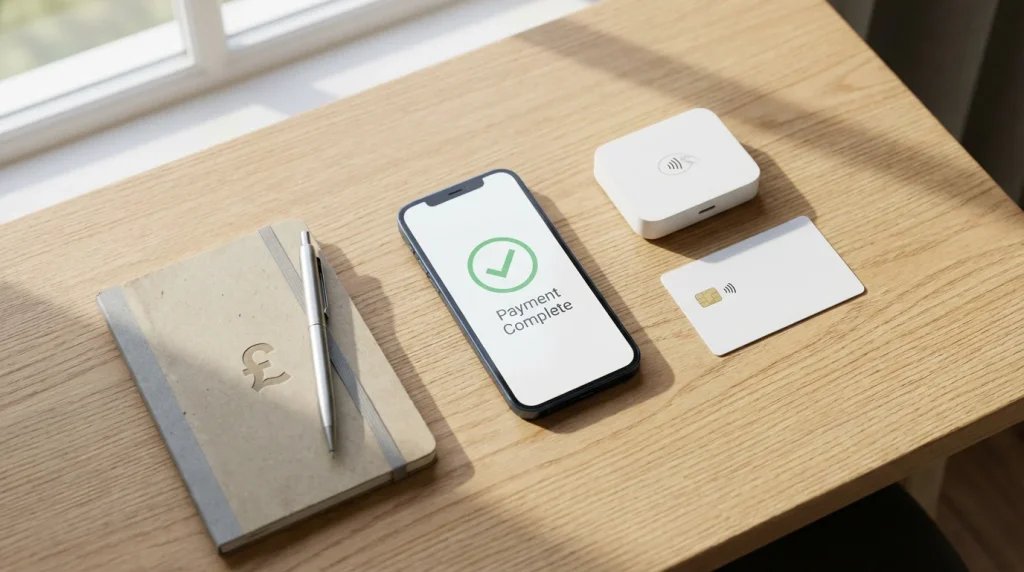
Since 2020, you can’t use a credit card on a UK gambling app — and that single rule changed the entire payment landscape. The Gambling Commission’s credit card ban, which took effect in April 2020, eliminated the most dangerous funding mechanism available to gamblers: the ability to bet with borrowed money. What remained — debit cards, e-wallets, bank transfers, and mobile payment services — forms a payments ecosystem with more variety than most players appreciate and more trade-offs than any operator will voluntarily explain.
The method you choose to deposit and withdraw on a UK gambling app affects more than transaction speed. It determines whether you’re eligible for the welcome bonus, how quickly you can access your winnings, whether the operator has direct visibility of your bank details, and in some cases, whether your bank will flag or block the transaction entirely. These aren’t edge cases. They’re routine outcomes that vary by payment method in ways that reward informed choices and penalise assumptions.
Speed asymmetry is the defining feature of gambling app payments in the UK. Deposits are designed to be fast — operators want your money on the platform as quickly as possible, and every payment method they accept achieves this in seconds to minutes. Withdrawals are where the variation lives. An e-wallet withdrawal might land in your account within four hours. A debit card withdrawal to the same bank that processed your instant deposit might take three to five business days to arrive. The gap between deposit speed and withdrawal speed isn’t a technical limitation in most cases. It’s a commercial arrangement that benefits from a player’s impatience.
This guide covers every major payment method available on UK gambling apps in 2026, comparing them on the dimensions that actually matter: deposit and withdrawal speed, bonus eligibility, privacy, fees, and practical reliability. The right method depends on your priorities, but understanding the full picture ensures that the choice is yours to make rather than one the operator makes for you by defaulting to whatever generates the most friction between you and your withdrawable balance.
Debit Cards — Visa and Mastercard on Gambling Apps
Visa and Mastercard are the default — but your bank might have its own opinion about gambling transactions. Debit cards remain the most widely used payment method on UK gambling apps, largely because they’re universal: every player has one, every operator accepts them, and no additional account setup is required. Deposits via debit card process instantly. The money moves from your bank to the operator’s payment processor in seconds, and your playable balance updates immediately. For the deposit side of the equation, debit cards are frictionless.
Withdrawals are where the debit card experience diverges from the deposit experience. Processing times for debit card withdrawals range from 24 hours at the fastest operators to five business days at the slowest, with two to three days being the most common window. The delay has two components: the operator’s internal processing time (how long before they initiate the transfer to your bank) and the banking network’s settlement time (how long the funds take to appear once the transfer is initiated). The first component is within the operator’s control. The second is governed by the Visa and Mastercard payment networks, which operate on batch settlement cycles that were designed for general retail commerce rather than speed-sensitive transactions.
Some operators have adopted Visa Fast Funds or Mastercard Send to accelerate debit card withdrawals, reducing the banking-side delay to near-instant for supported cards. Whether your card supports these faster channels depends on your bank, not the operator, and the functionality isn’t consistently advertised — some apps process Fast Funds withdrawals automatically when available, while others don’t support the option at all. If fast withdrawals are a priority and you’re committed to using a debit card, it’s worth checking whether your bank supports rapid crediting before you deposit.
Bank-side gambling blocks deserve attention. Several major UK banks — including Monzo, Starling, Barclays, and HSBC — offer customers the option to block gambling transactions on their debit cards, either through the banking app or by contacting the bank directly. These blocks prevent both deposits and, in some implementations, may delay processing of inbound gambling winnings. The blocks are designed as responsible gambling tools, and they’re effective. But players who’ve enabled a gambling block and later want to deposit may find the process of removing it deliberately friction-heavy — which is the point.
Debit card deposits are almost universally eligible for welcome bonuses and promotional offers, which is a significant advantage over some alternative payment methods. Operators treat debit card deposits as standard transactions without the bonus-hunting associations attached to e-wallets. If bonus eligibility matters to you — and for a first deposit, it usually should — a debit card is the safest choice from a promotional standpoint.
Privacy is the trade-off. A debit card deposit creates a direct record on your bank statement, typically showing the operator’s payment processing name (which may or may not resemble the gambling brand). For players who prefer that their gambling activity doesn’t appear on banking records — whether for personal, professional, or practical reasons — debit cards offer no separation between gambling transactions and everyday spending. This visibility is both a transparency feature and a potential concern, depending on your circumstances.
E-Wallets — PayPal, Skrill, and Neteller
E-wallets are fast — but the speed comes with a trade-off most players don’t discover until they try to claim a bonus. PayPal, Skrill, and Neteller are the three dominant e-wallet options on UK gambling apps, and they share a common advantage: they sit between your bank and the operator, adding a layer of separation that improves both privacy and transaction speed. Withdrawals via e-wallet are typically the fastest option available, with many operators processing PayPal withdrawals within four to twelve hours and Skrill and Neteller within a similar window.
PayPal occupies a unique position in the UK gambling payment landscape. It’s the most trusted e-wallet brand among British consumers, it processes deposits instantly, and its withdrawal speeds are consistently among the fastest. PayPal also provides a layer of buyer protection and dispute resolution that other gambling payment methods lack — though invoking PayPal’s buyer protection on a gambling transaction is complicated by the fact that gambling losses are not eligible for purchase protection claims. The practical benefit is more about data security: PayPal never shares your bank details or card number with the gambling operator, reducing your exposure if the operator’s systems are compromised.
Skrill and Neteller are owned by the same parent company (Paysafe Group) and function similarly: you fund the e-wallet from your bank account, then use the e-wallet balance to deposit on gambling apps. Both are widely accepted across UK operators and both offer fast withdrawal processing. Their distinguishing feature — and their disadvantage — is their association with professional gambling and bonus-hunting activity. This association has led a significant number of UK operators to exclude Skrill and Neteller deposits from welcome bonus eligibility. The exclusion isn’t universal, but it’s common enough that players should verify bonus terms before depositing via either service.
The bonus exclusion issue is the central trade-off of e-wallet gambling. If you’re making a first deposit to claim a welcome offer, depositing via Skrill or Neteller may silently disqualify you from the promotion without any warning at the point of transaction. The terms will state the exclusion, but the deposit interface typically won’t flag it. PayPal deposits are generally bonus-eligible at most UK operators, though exceptions exist and terms should always be checked. For ongoing deposits after the welcome offer, e-wallet exclusions rarely apply to reload bonuses or loyalty rewards.
Fees are another consideration. PayPal charges no fees for gambling deposits or withdrawals in the UK. Skrill and Neteller may charge fees for certain funding methods (credit card to e-wallet is charged, bank transfer is typically free) and for currency conversion if applicable. Some operators pass through processing fees on e-wallet withdrawals, though this is rare among major UK brands. The net cost of e-wallet transactions is generally zero or negligible for players using them in pounds sterling.
The privacy advantage is real and increasingly valued. E-wallet transactions appear on your bank statement as a payment to PayPal, Skrill, or Neteller — not as a gambling transaction. For players who want to keep their gambling activity separate from their primary bank records, e-wallets provide this separation automatically. The gambling transactions appear within the e-wallet’s own transaction history, which is accessible only through the e-wallet account.
Apple Pay, Google Pay, and Pay by Mobile
Apple Pay made deposits frictionless — but withdrawals still can’t go back the same way. Apple Pay and Google Pay are the fastest deposit methods on UK gambling apps: tap, authenticate with Face ID or fingerprint, and the funds appear in your account within seconds. The convenience is genuine, and the security model is strong — both services use tokenisation, meaning the operator never receives your actual card number. Instead, a device-specific token is generated for each transaction, reducing fraud risk and protecting your card details even if the operator’s systems are breached.
The critical limitation is directional. Apple Pay and Google Pay are deposit-only methods on UK gambling apps. You cannot withdraw to Apple Pay or Google Pay. When you request a withdrawal, the operator must route the funds to an alternative method — typically the debit card linked to your Apple Pay or Google Pay wallet, or a bank transfer to the account on file. This creates an asymmetry: deposits are instant, but withdrawals revert to the timelines of the underlying payment method, which means the three-second deposit may be paired with a three-day withdrawal wait.
Not every UK gambling app supports Apple Pay or Google Pay. Acceptance has grown steadily since 2022, and the majority of major operators now offer at least Apple Pay for deposits, but coverage isn’t universal. Google Pay acceptance is slightly less common, partially because the Android gambling app ecosystem is more fragmented (with some operators offering APK downloads rather than Google Play Store apps). If mobile payment is your preferred deposit method, verify acceptance before registering.
Pay by Mobile (also marketed as Pay by Phone, Boku, or Payforit) allows deposits charged directly to your mobile phone bill. The appeal is simplicity — no card details, no e-wallet account, no bank login — but the limitations are significant. Deposit limits are low, typically £30 per day. Withdrawals via Pay by Mobile are impossible; you’ll need an alternative method on file. And the service charges a fee to the operator, which some pass through to the player as a surcharge of 10% to 15% on deposits. For most players, Pay by Mobile is a last-resort method rather than a preferred one, useful only if other options are temporarily unavailable.
The responsible gambling dimension of frictionless deposits is worth acknowledging. Apple Pay’s speed removes the natural pause that exists when entering card details manually — the few seconds of typing that give a player a moment to reconsider. That pause is small, but behavioural research suggests it matters. If you find that the ease of mobile payment deposits correlates with deposits you later regret, switching to a method with slightly more friction may be a worthwhile change. The convenience feature is only convenient if it serves your intentions rather than undermining them.
Bank Transfers and Trustly — Direct Withdrawals
Bank transfer is the slowest deposit method — and often the fastest withdrawal route. That paradox reflects the mechanics of Open Banking infrastructure, which has transformed how direct bank payments work on UK gambling apps. Traditional bank transfers — manual BACS or Faster Payments initiated through your banking app — still function, but the real shift has been the integration of Open Banking providers like Trustly, which automate the bank-to-operator transfer process and invert the speed equation.
Trustly operates as an intermediary that connects directly to your bank via the Open Banking API. When you select Trustly as a deposit method, you’re redirected to your bank’s authentication screen, approve the payment, and the funds are credited to your gambling account — typically within minutes, though not quite as instantly as card or e-wallet deposits. The advantage over traditional bank transfers is significant: what used to take one to three business days via manual transfer now processes in minutes through Trustly’s automated pipeline.
Withdrawal via Trustly or direct bank transfer is where the method genuinely excels. Because the funds move directly from the operator’s account to your bank without passing through a card network or e-wallet intermediary, the settlement can be faster and is often processed as a Faster Payment, arriving in your account within hours. Several UK operators now advertise same-day bank transfer withdrawals for verified accounts, and in practice, Trustly withdrawals are competitive with PayPal for speed — occasionally faster, depending on the operator’s processing queue.
The absence of an intermediary also means higher withdrawal limits. E-wallets and card networks impose per-transaction and daily limits that can constrain larger withdrawals, sometimes requiring multiple transactions spread over several days. Bank transfers typically accommodate higher single-transaction amounts — £10,000 or more at most operators — making them the preferred method for players withdrawing significant sums, whether from a large win or accumulated balance.
The trade-off is setup friction. Using Trustly requires granting temporary Open Banking access to your bank account, which some players find uncomfortable even though the access is read-only, transaction-specific, and governed by FCA regulations. Traditional bank transfers require manual entry of payment details and may take longer to process. Neither method offers the tap-and-go simplicity of Apple Pay or the one-click ease of a saved card. For the player who prioritises withdrawal speed and withdrawal limits over deposit convenience, bank transfer — particularly through Trustly — is the strongest option in the current UK market.
How to Choose the Right Payment Method
There’s no single best payment method — there’s only the one that matches how you play. The right choice depends on which of four competing priorities matters most to you: speed, bonus eligibility, privacy, or withdrawal limits. No single method wins on all four dimensions, which means the decision involves conscious trade-offs rather than a universal recommendation.
If you’re making a first deposit and plan to claim a welcome bonus, a debit card is the safest default. Bonus eligibility is near-universal for card deposits, and the method requires no additional account setup. The withdrawal wait is longer than e-wallets, but for the initial deposit, the priority is ensuring you qualify for the promotional offer. PayPal is a viable alternative if the specific operator confirms bonus eligibility for PayPal deposits — most do, but not all.
If withdrawal speed is your primary concern — and for experienced players, it often is — PayPal or Trustly offers the best combination of fast processing and wide acceptance. PayPal consistently delivers withdrawals within 4 to 12 hours at major UK operators, and Trustly’s direct bank integration can match or beat that timeline. Both methods avoid the multi-day settlement cycles that debit card withdrawals are subject to, and both provide a clear audit trail for your records.
If privacy matters — you’d prefer gambling transactions not to appear on your primary bank statement — an e-wallet provides separation. PayPal transactions appear as PayPal on your bank records. Skrill and Neteller appear under their own names. The gambling activity is visible only within the e-wallet’s internal transaction history. This separation isn’t about concealment; it’s about controlling how your financial records categorise your spending, which is a legitimate preference regardless of your reasons.
If you’re withdrawing larger amounts — a significant win, a VIP cashout, or simply a larger accumulated balance — bank transfer handles higher limits with fewer restrictions than card networks or e-wallets. The per-transaction ceiling is typically the highest of any available method, and the direct bank-to-bank routing avoids intermediary limits that might force you to split a withdrawal into multiple transactions.
A practical approach for regular players is to maintain two payment methods on each gambling app: a debit card for the initial deposit (securing bonus eligibility) and an e-wallet or Trustly for subsequent deposits and all withdrawals (optimising for speed). This dual-method approach captures the benefits of both worlds without the compromises of committing to a single channel. The five minutes spent setting up PayPal or Trustly on your account will save days of withdrawal waiting over the lifetime of your use.
When Money Moves Slowly — What Withdrawal Delays Really Mean
A 72-hour pending period before your withdrawal even starts processing isn’t a technical limitation — it’s a business decision. Understanding why money sometimes moves slowly on gambling apps requires distinguishing between three different types of delay, each with different causes and different implications for whether you should be concerned.
KYC and AML verification holds are the most common cause of first-withdrawal delays. UK gambling operators are legally required to verify your identity before processing a withdrawal, and the Gambling Commission’s rules mandate that this verification is completed — not merely initiated — before funds are released. If you haven’t submitted identification documents before requesting a withdrawal, the process pauses while the operator verifies your passport or driving licence, confirms your address via utility bill or bank statement, and in some cases validates the payment method you used to deposit. This process can take 24 to 72 hours at operators with manual review teams, though the best apps now use automated document verification that completes within minutes. The practical advice is simple: complete KYC verification as soon as you register, before you ever win anything. The delay only hurts when there’s money waiting.
Operator processing time — the interval between your withdrawal request being approved and the funds being sent to your payment provider — is the component most directly within the operator’s control, and the one that reveals the most about their attitude toward customers. Some operators process approved withdrawals in batches, once or twice per day, creating delays of 12 to 24 hours even after all verification is complete. Others process in near-real-time, initiating the transfer within minutes of approval. The batch-processing model is a legacy of older payment infrastructure, but some operators maintain it because the delay window creates an opportunity for players to reverse their withdrawal and continue playing — a behaviour known as reverse withdrawal or withdrawal cancellation.
Reverse withdrawal windows are the most cynical form of payment delay. During the pending period before a withdrawal is processed, some operators allow — and even encourage, via on-screen prompts — the player to cancel the withdrawal and return the funds to their playable balance. The existence of a reverse withdrawal option is technically a “feature,” but its practical effect is to exploit the regret and impatience that the pending period itself generates. Operators that have eliminated pending periods and reverse withdrawal options have done so as a competitive differentiator, recognising that players who receive their winnings quickly are more likely to trust the app and return voluntarily.
Payment provider processing is the final link in the chain and the one the operator has least control over. Once the operator initiates the transfer, the funds must pass through the payment network (Visa, Mastercard, PayPal, Trustly, or the banking system) before appearing in your account. E-wallet processing is fastest (minutes to hours). Bank transfers via Faster Payments are next (same day). Debit card returns via card networks are slowest (one to five business days) because they use the same settlement infrastructure as retail refunds, which was built for reliability rather than speed.
When a withdrawal takes longer than the operator’s stated timeframe, the escalation path follows a predictable sequence. Contact the operator’s support team first — live chat is faster than email — and request a specific update on whether the delay is verification-related, processing-related, or payment-network-related. If the operator can’t provide a clear answer or the delay exceeds what’s stated in their terms, file a complaint through the operator’s formal complaints procedure. If that fails, escalate to the operator’s alternative dispute resolution provider (listed in their terms) or directly to the Gambling Commission if you believe the operator is in breach of licence conditions.
The transparency of an operator’s payment terms — how clearly they state processing times, whether they disclose pending periods, whether they explain the distinction between their processing time and the payment network’s settlement time — is one of the most reliable quality signals available before you deposit. An operator that is honest about a 24-hour processing window is more trustworthy than one that advertises “instant withdrawals” and delivers them in 72 hours. What a gambling app tells you about how and when you’ll get your money back reveals more about its character than anything else on its homepage.